Instrument transformers, particularly Current Transformers (CT) and Voltage Transformers (VT), play an essential role in the measurement, monitoring, and protection of electrical systems. These devices are critical components that allow the scaling down of high currents and voltages, making them safe for accurate measurement and analysis. This article will explore the key differences between Current Transformers (CT) and Voltage Transformers (VT), outlining their functionalities, working principles, applications, and the factors that differentiate them.
Understanding the distinctions between these two types of instrument transformers is vital for electrical engineers and professionals working in power systems. Both are indispensable in ensuring the reliability, efficiency, and safety of electrical networks.
1. What is a Current Transformer (CT)?
1.1 Definition of CT
A Current Transformer (CT) is a type of instrument transformer used primarily to measure alternating current (AC). CTs are designed to produce a reduced current in its secondary winding, which is proportional to the current flowing in the primary circuit. This allows high current values to be safely monitored and used for control purposes. Typically, the secondary current of a CT is measured in amperes (A), and it provides a scaled-down version of the primary current for easy reading and use in protective systems.
1.2 Working Principle of Current Transformers
The working principle of a CT is based on electromagnetic induction. When current flows through the primary conductor, it generates a magnetic field around the conductor. This magnetic field induces a current in the secondary winding of the CT, which is proportional to the primary current. The secondary winding has many more turns than the primary conductor, providing a stepped-down current for measurement. This allows CTs to handle high current levels while delivering a manageable output to measurement devices or protective relays.
CTs typically have a turns ratio of 1000:1 or more, meaning that for every 1000 amperes flowing through the primary conductor, 1 ampere will flow through the secondary winding. This reduction ratio is critical for scaling down large currents.
1.3 Applications of CT
Metering: CTs are used for current metering in high-voltage power systems, providing accurate readings of current flowing through the network.
Protection: CTs are essential in protective systems, where they detect fault currents (such as short circuits or overloads) and trigger alarms or automatic circuit breakers to protect the equipment and personnel.
Control Systems: In power plants, CTs enable the control of various electrical devices and systems by providing real-time current readings for monitoring and adjustment.
2. What is a Voltage Transformer (VT)?
2.1 Definition of VT
A Voltage Transformer (VT) is another type of instrument transformer designed to measure high voltages and scale them down to a level suitable for meters and protection equipment. Like CTs, VTs operate on the principles of electromagnetic induction but focus on voltage reduction instead of current. VTs help electrical engineers monitor and control voltage levels within power systems, ensuring that systems operate within safe and effective voltage limits.
2.2 Working Principle of Voltage Transformers
Voltage transformers function similarly to CTs in that they rely on electromagnetic induction. The primary winding of a VT is connected across the system to the high voltage, while the secondary winding delivers a reduced voltage to measurement devices. The voltage reduction is proportional to the turns ratio of the VT. If the turns ratio is 100:1, a high voltage of 10,000 V will result in a secondary voltage of 100 V.
The transformer ratio in a VT can range from 100:1 to several thousand to one, depending on the system's voltage levels. The reduced secondary voltage is then used for metering and protection, ensuring that sensitive equipment is not exposed to dangerous high voltage levels.
2.3 Applications of VT
Voltage Metering: VTs are used extensively in voltage metering for high-voltage transmission lines and power plants, providing accurate voltage readings.
Voltage Protection: VTs are crucial in protecting equipment from over-voltage conditions. They enable protective relays to detect and respond to abnormal voltage fluctuations that could harm the system.
Control and Monitoring: VTs allow operators to monitor and control voltage levels across the system, ensuring that the voltage remains within safe limits.
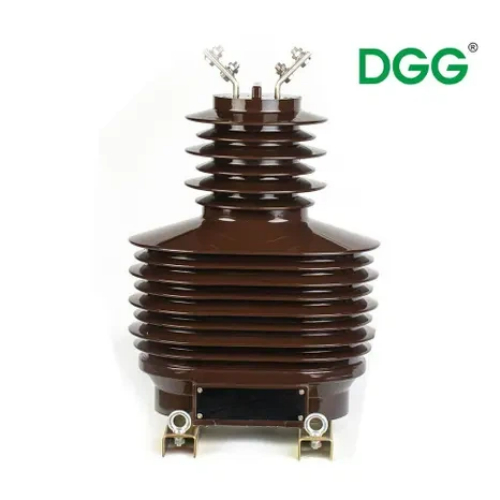
3. Key Differences Between Current Transformer (CT) and Voltage Transformer (VT)
3.1 Measurement Focus
Aspect | Current Transformer (CT) | Voltage Transformer (VT) |
Primary Measurement | Measures current in the electrical system. | Measures voltage in the electrical system. |
Output | Scaled-down current in the secondary winding. | Scaled-down voltage in the secondary winding. |
The key distinction between a CT and a VT lies in the primary measurement. CTs measure current flowing through conductors, while VTs measure the potential difference or voltage across components of the electrical system. Both transformers scale down their respective quantities for safe measurement and use in monitoring and control systems.
3.2 Construction and Design
Aspect | Current Transformer (CT) | Voltage Transformer (VT) |
Physical Design | Typically uses a ring-like core around the conductor or a hollow core design. | Uses a more conventional transformer design with primary and secondary windings. |
Core Type | The core is designed to handle the magnetic field created by the current. | The core is designed to handle the electric field created by the voltage. |
The construction of a CT is quite distinct from that of a VT. CTs often have a core designed to enclose a conductor, while VTs have a more traditional transformer design with primary and secondary windings around a core. This difference allows them to serve their respective functions efficiently.
3.3 Functionality
Aspect | Current Transformer (CT) | Voltage Transformer (VT) |
Purpose | Primarily used for current measurement and protection. | Primarily used for voltage measurement and protection. |
Output | Provides a reduced current output proportional to the current in the primary circuit. | Provides a reduced voltage output proportional to the voltage in the primary circuit. |
The functionality of CTs and VTs aligns with their respective roles in power systems. CTs help monitor and protect against current-related faults, while VTs handle voltage-related measurements and protection.
3.4 Accuracy and Calibration
Aspect | Current Transformer (CT) | Voltage Transformer (VT) |
Accuracy | High accuracy for current measurements with careful calibration. | High accuracy for voltage measurements, also requiring precise calibration. |
Calibration | Requires frequent calibration to maintain current accuracy. | Requires calibration for voltage accuracy, ensuring minimal error. |
Both CTs and VTs need to be carefully calibrated to provide accurate readings. Accuracy is critical for both transformers, as errors can lead to incorrect metering or improper protective response. Calibration procedures for both types of transformers are done regularly to ensure reliable operation.
4. When to Use Current Transformers (CT) vs. Voltage Transformers (VT)
4.1 Situations for Using Current Transformers (CT)
CTs are ideal for applications where current measurement and protection are critical. They are commonly used in:
Power distribution systems where fault currents need to be detected and managed.
Power plants to monitor generator and transformer currents.
Substations to monitor the current through transformers and feeders.
Metering systems where accurate current data is required for billing and load management.
4.2 Situations for Using Voltage Transformers (VT)
VTs are essential when voltage measurement and protection are necessary. VTs are commonly used for:
High-voltage transmission lines to ensure the voltage remains within safe levels.
Substations for monitoring line voltages and ensuring stability.
Power plants for controlling and metering the output voltage of generators and transformers.
Protective systems where voltage monitoring is required to prevent over-voltage conditions.
5. Role of Instrument Transformers in Electrical Systems
Both CTs and VTs play vital roles in ensuring that electrical systems operate efficiently and safely. Their importance includes:
Safety: They help in detecting faults, preventing overloading, and triggering circuit breakers in the event of abnormal conditions.
Accuracy: Both devices allow for accurate measurements of current and voltage, which are essential for proper metering and operational control.
Protection: They are integral parts of protective relays that disconnect faulty systems from the rest of the network to prevent damage.
Instrument transformers also play a significant role in helping utilities monitor system conditions and maintain optimal performance.
6. Conclusion
In summary, the primary distinction between Current Transformers (CT) and Voltage Transformers (VT) lies in their roles of measuring current and voltage in electrical systems. Both instrument transformers are essential for accurate metering, protection, and control, playing a critical part in ensuring the safety, reliability, and efficiency of power systems.
As professionals in the electrical industry, it’s crucial to understand the specific characteristics and applications of CTs and VTs. By selecting the right transformer for your needs, you can ensure precise measurements, enhance protection, and prevent faults, ultimately contributing to the stable operation of your system.
At Denggao Electric Co., Ltd., we specialize in providing high-quality instrument transformers tailored to meet the unique requirements of your electrical systems. Our expertise and commitment to innovation ensure that we deliver reliable solutions for both current and voltage measurement. If you're looking for trustworthy and efficient transformers, we invite you to reach out to us for more information and to discuss how we can support your project’s success.
7. FAQ
1. What is the main difference between CT and VT?
Answer: The primary difference between CT and VT is that CTs measure current, while VTs measure voltage. Both are used for scaling down their respective electrical quantities for safe measurement and protection.
2. Can CT and VT be used interchangeably?
Answer: No, CTs and VTs cannot be used interchangeably. CTs are designed for current measurement and protection, while VTs are designed for voltage measurement and control.
3. What are the common applications for CTs and VTs?
Answer: CTs are commonly used for current monitoring and fault detection, while VTs are used for voltage monitoring and over-voltage protection.
4. How do CTs and VTs help in measurement?
Answer: CTs reduce high current to a safe and measurable value, while VTs scale down high voltages to a safe level for monitoring and protection.


