You are here:Home » Solutions » Solutions » ZW20 Outdoor Vacuum Circuit Breaker Field Testing And Technical Support
ZW20 Outdoor Vacuum Circuit Breaker Field Testing And Technical Support
Views: 0 Author: Site Editor Publish Time: 2026-09-10 Origin: Site
Reliable project delivery does not end when a circuit breaker leaves the factory.
For outdoor vacuum circuit breakers used in utility distribution systems, field verification is an important step before equipment is put into service. It helps confirm that the breaker remains in the expected condition after transportation, handling and site preparation, while also allowing technical personnel to check the actual installation and operating requirements.
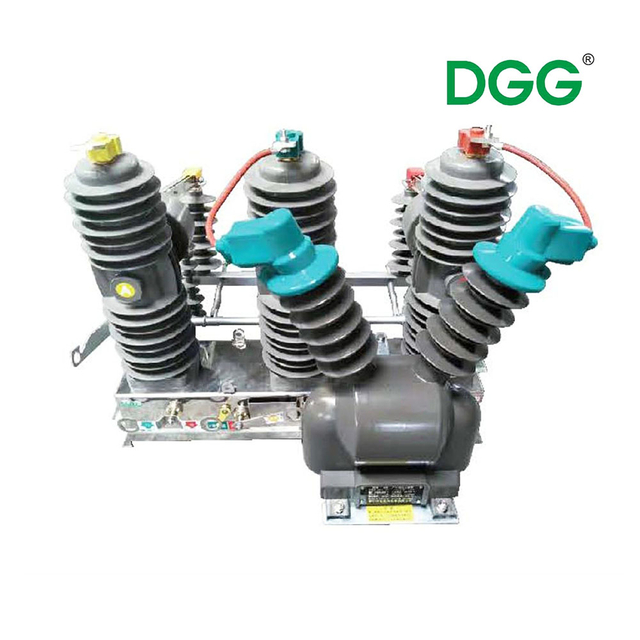
DGG Power recently provided on-site technical support for ZW20 outdoor vacuum circuit breakers for a regional power utility project. The work focused on equipment inspection, electrical verification and functional checks before subsequent installation and operation.
Item
Details
Project Type
Power utility field technical service
Main Equipment
ZW20 Outdoor Vacuum Circuit Breaker
Service Content
Equipment inspection, electrical verification and functional testing
Application
Utility distribution network
DGG Power Scope
Equipment supply and on-site technical support
From Factory Delivery to Field Verification
ZW20 outdoor vacuum circuit breakers are commonly used in distribution networks for feeder switching, line protection and related outdoor applications.
Even when equipment has completed factory inspection before shipment, the site environment introduces new variables. Transportation, temporary storage, handling and connection preparation can all affect the condition in which the equipment finally reaches the project.
For this reason, field testing is not a repetition of factory testing. It serves a different purpose: confirming that the delivered equipment is still consistent with the project requirements and is ready for the next stage of installation, commissioning or energization.
During field service, technical personnel can verify the breaker condition, operating function, electrical connections and project-specific configuration according to the applicable technical requirements.
Why On-Site Testing Matters
A circuit breaker may appear mechanically complete while still requiring further verification before service.
For example, the breaker body, operating mechanism, primary terminals and secondary connections all form part of one complete operating system. If any part is incorrectly connected, adjusted or configured, the equipment may not perform as expected after installation.
This is why on-site testing should focus on the complete equipment rather than only one component.
The specific test items should follow the breaker model, project specification and utility requirements. Field technicians should compare actual test results with the applicable technical criteria instead of using generic values from unrelated products.
Technical Support Is Part of Project Delivery
For utility and EPC projects, the value of a supplier is not limited to manufacturing equipment.
When technical personnel can support testing, troubleshooting and commissioning at the project site, communication becomes much more direct. Problems related to equipment condition, configuration or operation can be discussed with reference to the actual breaker rather than through documents alone.
This also helps create a clearer technical chain:
Factory production → Factory inspection → Delivery → Field testing → Installation and commissioning → Operation
For long-life power equipment, this continuity is important because every stage affects the reliability of the final project.
DGG Power Project Support
DGG Power provides medium- and high-voltage transmission and distribution equipment for utilities, substations, industrial systems and infrastructure projects.
For outdoor vacuum circuit breaker projects, DGG Power can support product selection, technical documentation, factory testing, field inspection, commissioning coordination and troubleshooting according to the agreed project scope.
The purpose of field service is not simply to complete a test record. It is to help ensure that the equipment delivered from the factory can be correctly connected with the actual project requirements.
Conclusion
A reliable outdoor vacuum circuit breaker project depends on more than product specifications.
Factory quality provides the starting point, while field testing and technical support help confirm that the equipment remains in the correct condition before installation and operation.
This ZW20 field testing project reflects DGG Power's approach to project delivery: combining equipment manufacturing with practical technical support throughout the delivery process.
If you are sourcing outdoor vacuum circuit breakers for a utility, substation or distribution project, contact DGG Power with your system voltage, rated current, short-circuit requirements, installation conditions and technical specification. Our team can support equipment selection, factory verification and project-based technical service.